Live
Bellwether

05 · Background · Illustrated timeline

Two institutions, one timeline.

How the Federal Reserve (1913→) and the ISM Manufacturing PMI (NAPM, 1915→) actually came to be. Each exhibit below pairs a primary-source portrait with a museum label and a citation. Scroll, or jump by decade.

Exhibits
25
Coverage
1913 → 2026
Photo source
Wikimedia · LoC
Rights
Public domain
1910s4 exhibits
1913
Federal Reserve
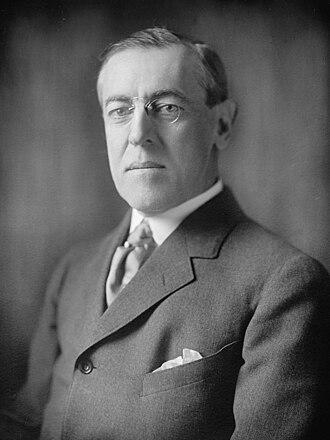
Woodrow Wilson, official presidential portrait
Library of Congress · public domain

The Federal Reserve Act is signed

Woodrow Wilson, 28th President

On December 23, 1913 Wilson signed the Federal Reserve Act, creating the Federal Reserve Board in Washington and a system of regional Reserve Banks — twelve, once the districts were drawn in 1914. The Federal Open Market Committee came later, in the banking acts of the 1930s. The dual mandate the Fed is most often described by today — stable prices and maximum employment — would not be added until 1977.

Source · Federal Reserve History — “Federal Reserve Act Signed”
1914
Federal Reserve
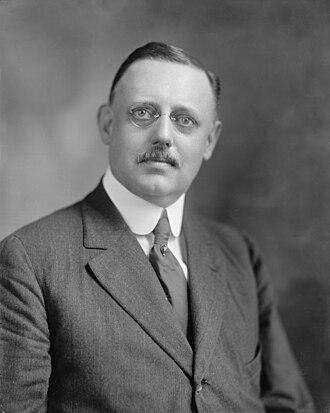
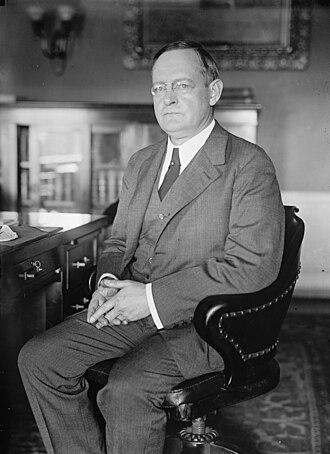
Charles S. Hamlin
Library of Congress · public domain

Chair 1 — Charles S. Hamlin

1914 → 1916

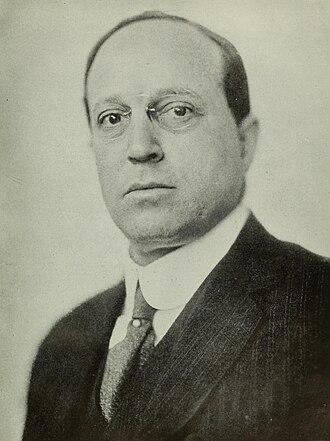
A Boston lawyer and Treasury veteran, Hamlin became the new Federal Reserve Board's first Governor — the title only became “Chairman” in 1935. His job was to stand up an institution that did not yet exist, hire its first staff, and convince Wall Street the regional Reserve Banks were not just twelve more government offices.

Source · Federal Reserve History — Charles S. Hamlin

1915
PMI / NAPM·ISM
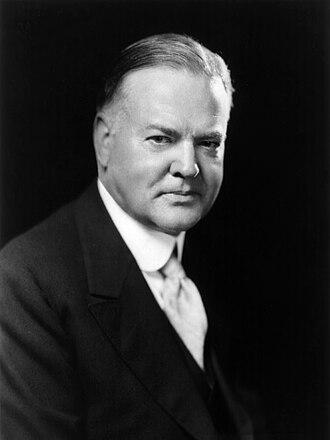
Herbert Hoover, official presidential portrait
Library of Congress · public domain (Hoover ca. 1929)

NAPM is founded in New York

National Association of Purchasing Agents · NAPM from 1968

Purchasing managers from a handful of large firms gathered in New York to form a standing forum for sharing supply-chain intelligence. For its first decade and a half NAPM was a trade association, not a publisher of statistics. That would change under the man pictured here, who as Commerce Secretary in the 1920s pushed American trade groups to publish standardized data.

Source · Wikipedia — Institute for Supply Management

1916
Federal Reserve
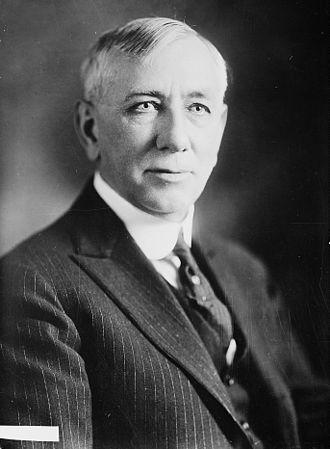
W. P. G. Harding
Library of Congress · public domain

Chair 2 — William P. G. Harding

1916 → 1922

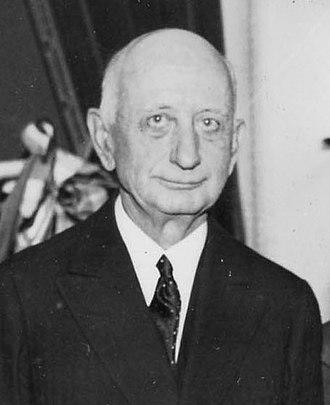
An Alabama banker (no relation to President Harding), W. P. G. Harding ran the young Fed through World War I — financing Liberty Bonds, holding rates low to support the war effort, then absorbing the violent 1920–21 deflation that followed demobilization. The episode taught the institution its first hard lesson about the cost of holding rates below the market.

Source · Federal Reserve History — William P. G. Harding

1920s2 exhibits
1923
Federal Reserve
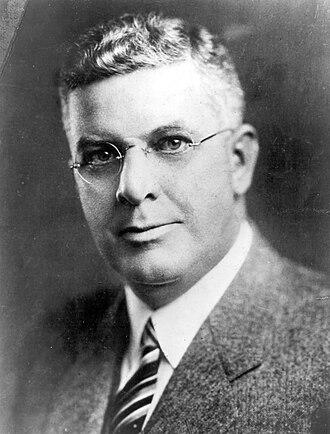
Daniel R. Crissinger
Library of Congress · public domain

Chair 3 — Daniel R. Crissinger

1923 → 1927

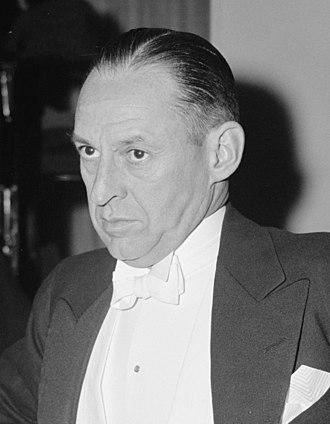
An Ohio politician and President Harding's personal friend, Crissinger presided over the Roaring Twenties and the Fed's first deliberate experiments with open-market operations — buying and selling government securities to influence bank reserves. The technique would become the central tool of modern monetary policy.

Source · Federal Reserve History — Daniel R. Crissinger

1927
Federal Reserve
Roy A. Young
Library of Congress · public domain

Chair 4 — Roy A. Young

1927 → 1930

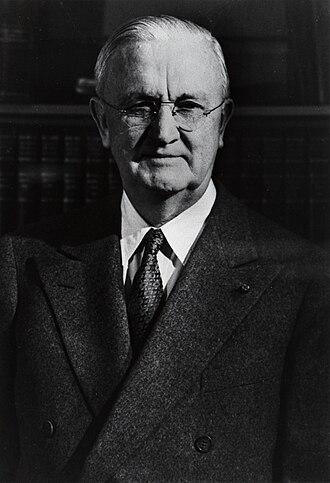
Young was Governor through the speculative blow-off of 1928–29 and the October 1929 crash itself. Historians still argue about whether the Fed of these years tightened too late and then too hard; Young stepped down in August 1930, just as the contraction was becoming a depression.

Source · Federal Reserve History — Roy A. Young

1930s4 exhibits
1930
Federal Reserve
Eugene Meyer
Library of Congress · public domain

Chair 5 — Eugene Meyer

1930 → 1933

A financier and future owner of the Washington Post, Meyer ran the Fed through the worst phase of the Depression — bank runs, the 1931 sterling crisis, the 1933 Bank Holiday. He resigned shortly after Roosevelt's inauguration over policy disputes about how aggressively the Fed should act.

Source · Federal Reserve History — Eugene Meyer

1931
PMI / NAPM·ISM
Herbert Hoover
Library of Congress · public domain

Purchasing agents launch the Report on Business

Hoover-era origin of the index this site plots

In 1930 Hoover, looking for data to steer by as the Depression deepened, backed a Chamber of Commerce committee to gather business conditions from member firms. It disbanded in June 1931. The purchasing agents' association, which had been surveying its own members since 1923, carried the work on through a new Business Survey Committee and sent the tabulations to the President. Apart from a pause during the Second World War, the Report on Business has been published ever since — almost a century later it is the ISM Manufacturing PMI you see on the homepage.

Source · Wikipedia — ISM Report On Business

1933
Federal Reserve
Eugene R. Black
Library of Congress · public domain

Chair 6 — Eugene R. Black

1933 → 1934

An Atlanta banker brought in by Roosevelt to steady nerves after the Bank Holiday and the first New Deal banking acts, Black served barely a year before resigning to return to the Atlanta Fed. His brief tenure spanned the creation of the FDIC and the Gold Reserve Act of January 1934, which transferred the Reserve Banks' gold to the Treasury.

Source · Federal Reserve History — Eugene Robert Black

1934
Federal Reserve
Marriner S. Eccles
Federal Reserve · public domain

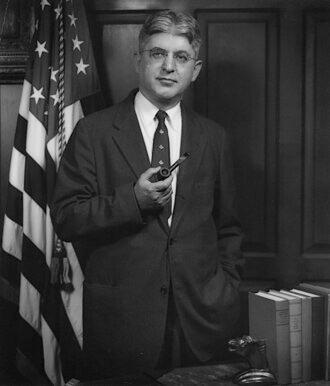
Chair 7 — Marriner S. Eccles

1934 → 1948 · architect of the modern Fed

A Utah banker who had survived the 1930s with his banks intact, Eccles essentially rewrote the Federal Reserve. The Banking Act of 1935 — which he drafted — moved authority from the regional Reserve Banks to the Washington Board, created the FOMC in its modern form, and retitled the chief officer “Chairman.” The Fed's main building in DC bears his name.

Source · Federal Reserve History — Marriner S. Eccles

1940s2 exhibits
1948
PMI / NAPM·ISM
Thomas B. McCabe
Library of Congress · public domain

The modern PMI series begins

January 1948 · the first month plotted on this site

The purchasing agents' survey resumed after the Second World War and has run every month since: each respondent reports better, same, or worse than last month, and the answers are tallied into diffusion indexes centered on 50. The composite PMI itself was devised in the early 1980s with economists at the Commerce Department and computed back over the postwar survey data, which is why the series — and the timeline on the homepage — begins in January 1948. Anything earlier exists in the association's own archives but not in a continuous comparable form.

Source · FRED — NAPM series metadata

1948
Federal Reserve
Thomas B. McCabe
Library of Congress · public domain

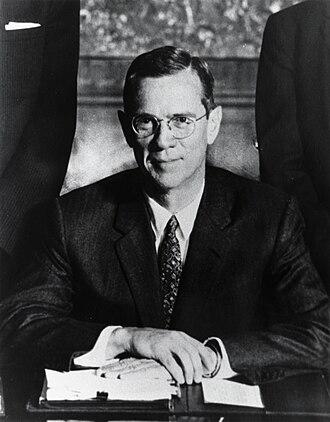
Chair 8 — Thomas B. McCabe

1948 → 1951

A Scott Paper executive recruited by Truman, McCabe inherited a Fed still pegging long-term Treasury yields at 2.5% — a wartime arrangement Truman wanted to keep. McCabe's running fight with the White House and the Treasury would produce the document that finally freed the Fed — negotiated, on the Treasury's side, by the man who would succeed him.

Source · Federal Reserve History — Thomas B. McCabe

1950s2 exhibits
1951
Federal Reserve
William McChesney Martin Jr.
Federal Reserve · public domain

The Treasury–Fed Accord

March 1951 · the Fed wins independence

After two years of escalating fights over the wartime rate peg, the Treasury and the Fed agreed on March 4, 1951 that the Fed would no longer be obligated to support government bond prices. McCabe stepped down; William McChesney Martin Jr., the Treasury official who negotiated the Accord, replaced him. It is the founding document of an independent modern central bank.

Source · Federal Reserve History — Treasury–Fed Accord

1951
Federal Reserve
William McChesney Martin Jr.
Federal Reserve · public domain

Chair 9 — William McChesney Martin Jr.

1951 → 1970 · longest-serving chair

Martin served almost nineteen years under five presidents — Truman, Eisenhower, Kennedy, Johnson, Nixon — and popularized the Fed's most-quoted self-description: the central bank, he told New York bankers in 1955, “is in the position of the chaperone who has ordered the punch bowl removed just when the party was really warming up.” His tenure ended with mounting Vietnam-era inflation that his successors would inherit.

Source · Federal Reserve History — William McChesney Martin Jr.

1970s4 exhibits
1970
Federal Reserve
Arthur F. Burns
Federal Reserve · public domain

Chair 10 — Arthur F. Burns

1970 → 1978 · stagflation Fed

An academic economist and Nixon confidant, Burns ran the Fed through the 1973 oil shock, the 1974–75 recession, and the long stagflation that followed. Tape recordings later released from the Nixon White House show sustained presidential pressure on Burns to keep money easy ahead of the 1972 election — a textbook case of why central-bank independence matters.

Source · Federal Reserve History — Arthur F. Burns

1977
Federal Reserve
Arthur F. Burns chairing the FOMC
Federal Reserve · public domain

Congress codifies the dual mandate

Federal Reserve Reform Act of 1977

The Federal Reserve Reform Act amended the 1913 Act to direct the Fed to “promote effectively the goals of maximum employment, stable prices, and moderate long-term interest rates.” The dual mandate the Fed still cites today was added here — sixty-four years after the institution itself was created. The Full Employment and Balanced Growth Act of 1978 (Humphrey–Hawkins) then required the Fed to report to Congress twice a year on its progress against those goals — the “Humphrey–Hawkins testimony” that ran until 2000 and survives in spirit as the semi-annual Monetary Policy Report.

Source · Federal Reserve History — Federal Reserve Reform Act of 1977

1978
Federal Reserve
G. William Miller
Federal Reserve · public domain

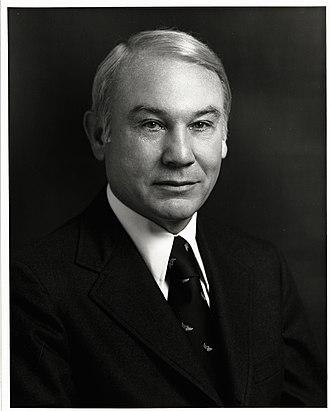
Chair 11 — G. William Miller

1978 → 1979 · briefest modern tenure

A Textron CEO with no central-banking background, Miller was Carter's compromise pick. Inflation accelerated from about 6½% to over 11% during his seventeen months at the Fed, and Carter moved him to Treasury — clearing the way for the chair who would finally break it.

Source · Federal Reserve History — G. William Miller

1979
Federal Reserve
Paul A. Volcker
Wikimedia Commons · public domain

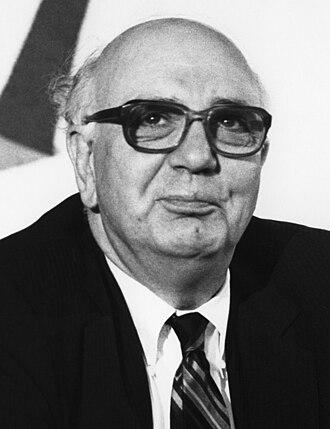
Chair 12 — Paul A. Volcker

1979 → 1987 · the inflation chair

On October 6, 1979 — the “Saturday-night special” — Volcker announced the Fed would target the money supply rather than the funds rate, and let rates go where they had to. The funds rate peaked over 20%; back-to-back recessions followed; inflation broke. The first scenario in this site's Fed Chair game puts you in his seat in August 1979.

Source · Federal Reserve History — Paul Volcker

1980s1 exhibit
1987
Federal Reserve
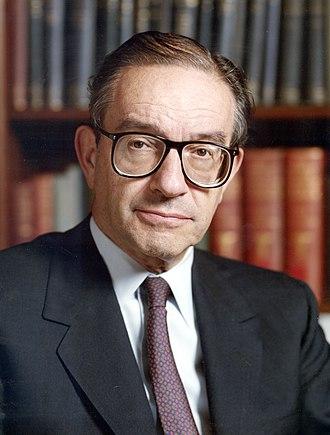
Alan Greenspan
Federal Reserve · public domain

Chair 13 — Alan Greenspan

1987 → 2006 · “The Maestro”

Greenspan took office two months before Black Monday and served almost two decades — through the 1990s expansion, the dot-com boom and bust, and the early 2000s housing run-up. His reputation, once Olympian, has been substantially revised since 2008; he himself acknowledged in congressional testimony that his model of the world had a flaw.

Source · Federal Reserve History — Alan Greenspan

2000s2 exhibits
2002
PMI / NAPM·ISM
Alan Greenspan, then Fed chair
Federal Reserve · public domain

NAPM becomes ISM

Institute for Supply Management

On January 1, 2002 NAPM rebranded as the Institute for Supply Management, reflecting a broader scope: not just purchasing, but the full supply chain. The Manufacturing Report on Business kept its month-by-month continuity. The headline number became “ISM Manufacturing PMI” — the name still in use today.

Source · Wikipedia — Institute for Supply Management

2006
Federal Reserve
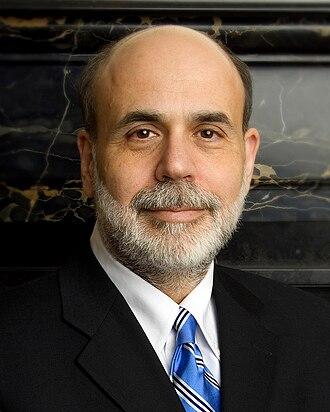
Ben S. Bernanke
Federal Reserve · public domain

Chair 14 — Ben S. Bernanke

2006 → 2014 · the crisis chair

A Princeton economist whose academic career had been dedicated to studying the Great Depression, Bernanke became chair eighteen months before the Global Financial Crisis. He authored QE1, QE2, and QE3, took the funds rate to zero, and pushed the Fed's balance sheet from under $1 trillion to over $4 trillion.

Source · Federal Reserve History — Ben S. Bernanke

2010s3 exhibits
2014
Federal Reserve
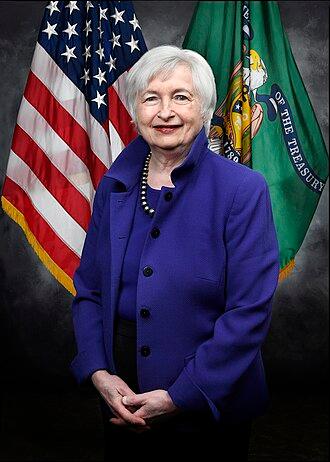
Janet L. Yellen
Federal Reserve · public domain

Chair 15 — Janet L. Yellen

2014 → 2018 · first woman chair

A labor economist who had chaired Clinton's Council of Economic Advisers, Yellen took office as the first woman to lead the Fed. Her tenure managed the slow “liftoff” from the zero lower bound — December 2015 was the first rate hike in nine years — and the start of the long normalization that Powell would inherit.

Source · Federal Reserve History — Janet L. Yellen

2016
PMI / NAPM·ISM
Janet L. Yellen, then Fed chair
Federal Reserve · public domain

FRED drops the ISM series

Why this site keeps a hand-curated PMI

In 2016 ISM tightened the redistribution license on its 22 monthly series. The Federal Reserve Bank of St. Louis's FRED service, which had carried them for years, removed all twenty-two. That is why Bellwether maintains a separate hand-curated PMI file alongside FRED's now-frozen NAPM placeholder — see the data ledger for the full chain.

Source · FRED — NAPM series notice

2018
Federal Reserve
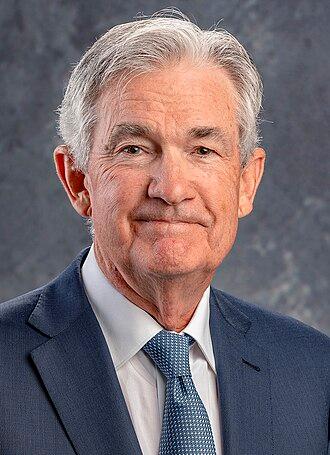
Jerome H. Powell
Federal Reserve · public domain

Chair 16 — Jerome H. Powell

2018 → 2026

A lawyer and former private-equity executive — the first non-economist chair since Miller — Powell took the Fed through the 2020 pandemic shock (cutting to zero in two weeks, expanding the balance sheet by $3 trillion) and the 2022–23 hiking cycle that lifted the funds rate from zero to over 5% in sixteen months. When his term as chair ended in May 2026 he stayed on as a governor — the first former chair to remain on the Board since Eccles in 1948.

Source · Federal Reserve History — Jerome H. Powell

2020s1 exhibit
2026
Federal Reserve
Kevin M. Warsh
Federal Reserve · public domain

Chair 17 — Kevin M. Warsh

2026 → present

A former Morgan Stanley mergers banker and Bush White House economic aide, Warsh first joined the Board in 2006 at 35 — the youngest appointee in the Fed's history — and served as its main liaison to Wall Street through the 2008 crisis before resigning in 2011. Nominated by President Trump in January 2026 and confirmed 54–45, he was sworn in at the White House on May 22, 2026. He is the chair sitting at the right edge of every chart on this site.

Source · Federal Reserve History — Kevin M. Warsh

Four of the chairs above face you in the decision game. For where every number on the site comes from, see How accurate is this? For the editorial method behind policy interpretations, see About.

Portraits sourced from Wikimedia Commons and the Library of Congress; all are works of the U.S. federal government or otherwise in the public domain. If you spot an attribution error, please open an issue.